Have you ever noticed that some of your shrubs have a black mold coating their leaves? Recently, I was at home visiting my parents and my mom was telling me that her crape myrtle was covered in some sort of black mold. She was very concerned and wanted me to go “check it out.” I took one look at the bush and knew we were dealing with sooty mold.
 |
| Sooty Mold on Crape Myrtle (Photo By: B. Lookabaugh) |
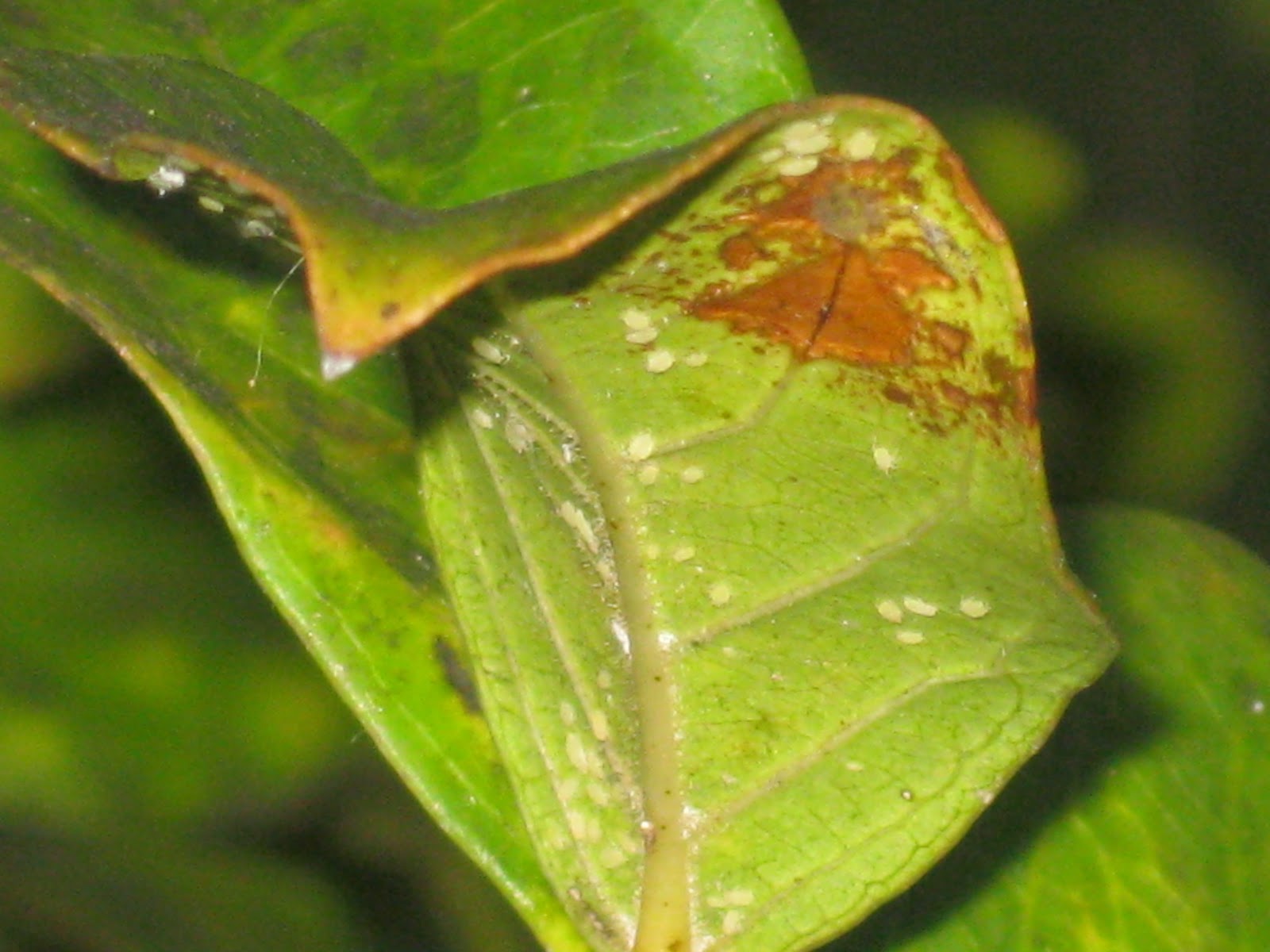
Sooty molds are dark-colored, nonparasitic fungi that grow on insect honeydew. So what is honeydew - sounds tasty doesn’t it? It is a sweet, sticky liquid produced by aphids, soft scales, mealy bugs, and some species of leaf hoppers. These insects suck sugary sap from the leaves and excrete honeydew - a mixture of sugars, amino acids, and other organic substances. Essentially, honeydew is aphid poop!
Soon after a plant is heavily infested with aphids or other sucking insects, leaves are covered in honeydew. The honeydew serves as a nutritional substrate for dark-walled sooty mold fungi. In severe cases, honeydew can drip from infested leaves and stick onto other plants or objects. When this happens, you might end up with sooty mold on your car, house, propane tank, or patio furniture!
 |
Sooty mold growing on sign beneath infested tree
(Photo By: Whitney Cranshaw, Bugwood) |
Like my parents, you may notice more sooty mold problems after it rains. Rain can deposit honeydew even on plants that are not infested with honeydew-producing insects. Since spores of sooty mold fungi are also dispersed in wind and rain, sooty mold problems soon follow.
Sooty molds typically grow in patches on plant surfaces and can be distinguished from other fungi because they are strictly superficial. The dark mycelium can be wiped clean from the plant surface using a moistened paper towel or your hand. Most sooty mold fungi are harmless to plants. If the mold is extremely abundant, it can prevent leaves from obtaining adequate sunlight and thus reduce plant vigor. Sooty molds also lessen the aesthetic value of ornamental plants and shrubs.
Even if sooty mold is extensive, it is best not to apply fungicides. The mold can be washed away with a forceful jet of water. You can control the insects that produce the honeydew on which the sooty mold grows with insecticidal soap or horticultural oils. Horticultural oils also loosen the sooty molds from the plant surface, which speeds up the weathering away process.
 |
Aphids: Responsible for producing honeydew
(Photo By: B. Lookabaugh |
For more information: